1. Is it gas, electric, or dual-fuel?
The answer determines who should make the connection safe. Gas and hard-wired electrical work should be completed by the appropriate qualified professional before hauling.
Do not rely on the front controls alone. Confirm the actual connection behind the appliance.
2. Is it freestanding or built in?
A freestanding range can usually move once disconnected and clear of its anti-tip hardware. A wall oven or built-in cooktop must first be released from cabinetry and supported correctly.
3. What can come loose?
Remove racks, trays, burner grates, and other loose pieces. Pack them separately so they do not shift, strike glass, or fall onto the route.
- Oven racks
- Broiler trays
- Burner grates
- Removable knobs
- Loose trim
4. What is the narrowest point?
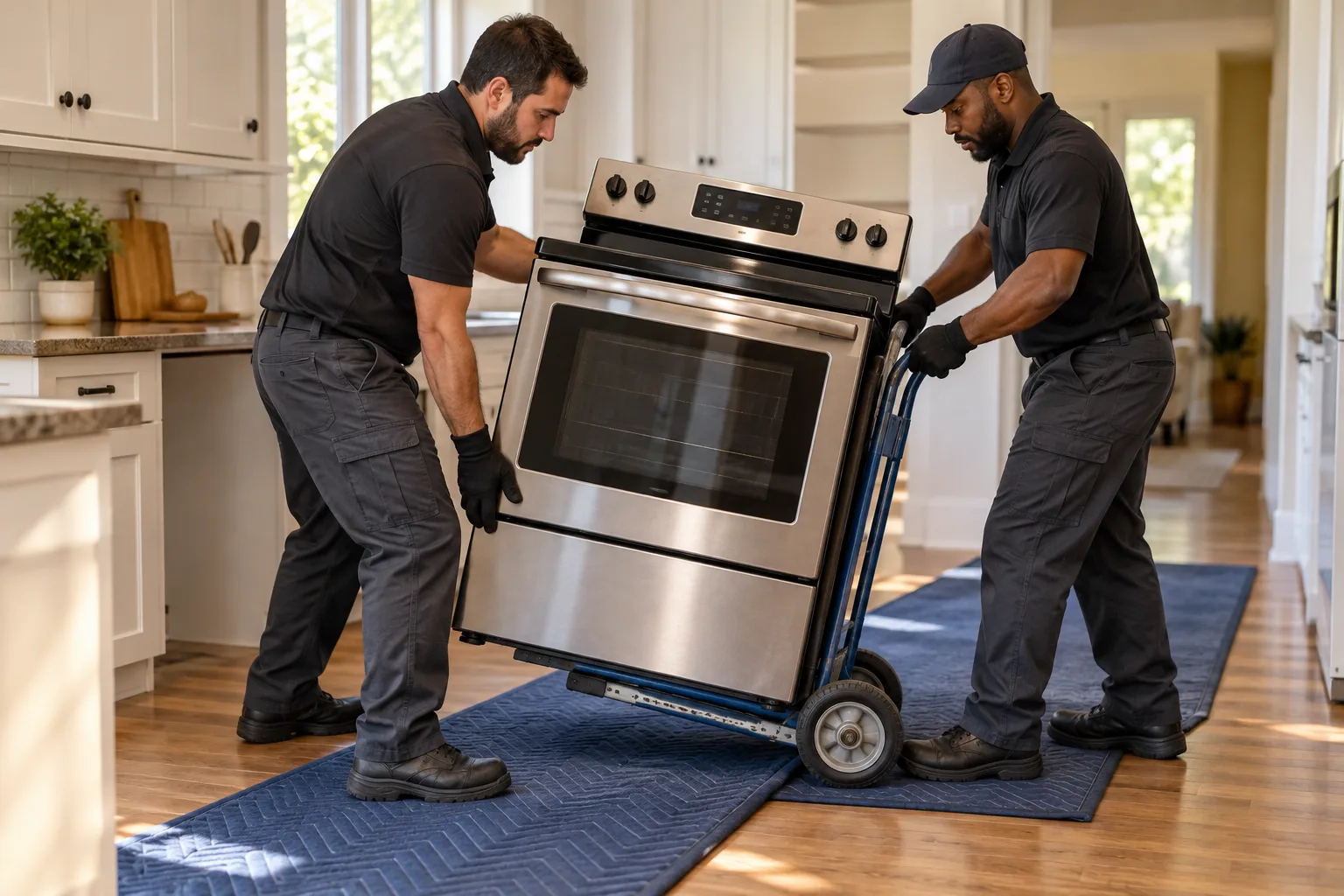
Measure the range and every doorway or turn between the kitchen and the loading point. Protect flooring along the route and clear nearby cabinet doors, mats, and pet gates.
5. Is any glass or metal damaged?
Report a cracked door, broken cooktop, loose panel, or sharp edge before pickup. Damaged parts may need to be stabilized before the appliance can be handled.
Sources checked
Safe-disposal guidance was checked against the U.S. EPA appliance-disposal guidance. Chesapeake municipal context was checked against the City of Chesapeake bulk trash page. Local rules can change, so verify the current receiving-facility requirements.