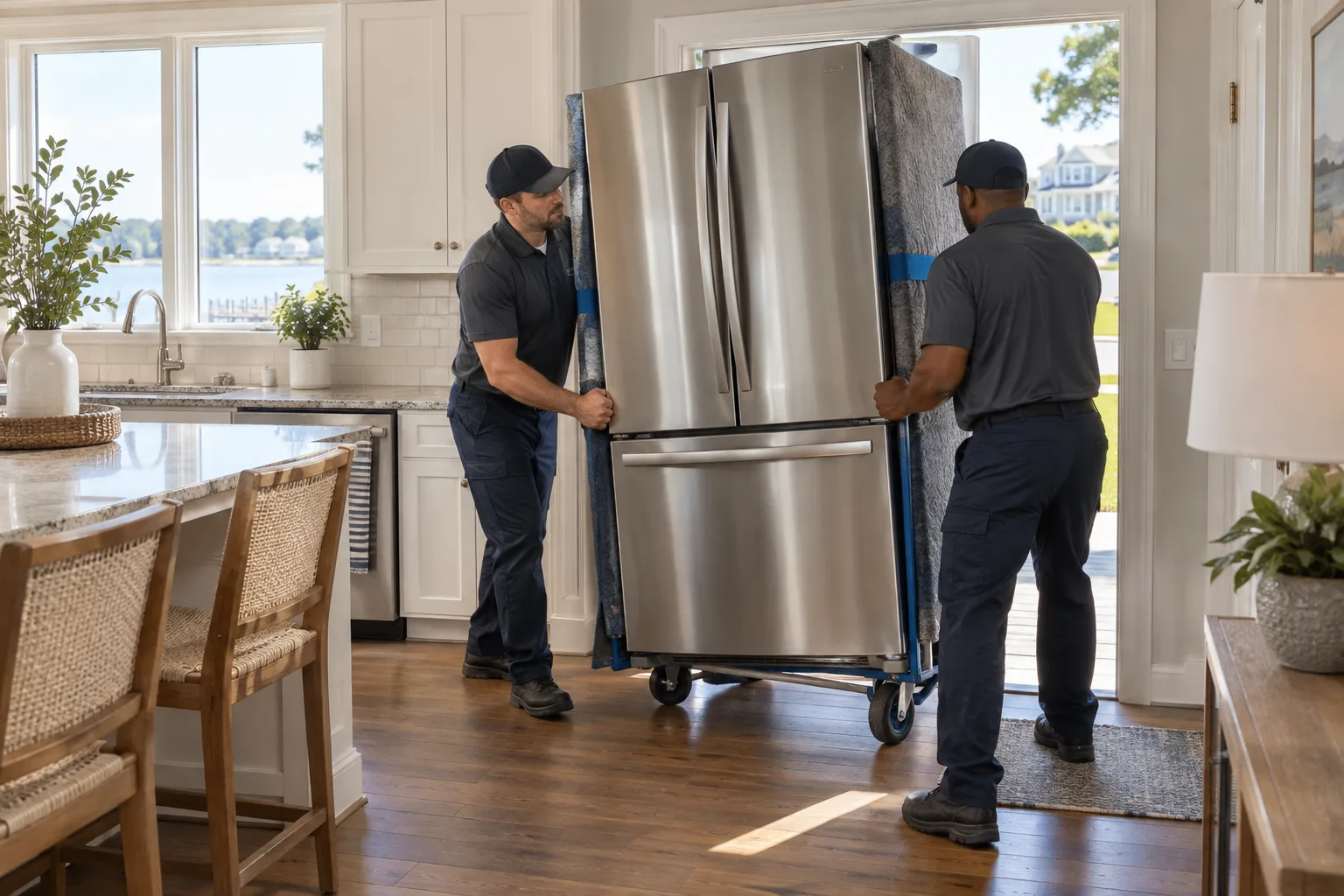
Start 24 hours before the move
Move food to a cooler or another appliance. Remove shelves, bins, and drawers so they cannot slide or crack. If frost has built up, allow enough time for it to melt and place towels where water may collect.
Do not scrape ice with a sharp tool. A puncture can damage the cabinet or refrigerant system.
- Empty food and ice
- Remove loose interior parts
- Defrost and dry
- Coil and secure the power cord
Measure the route, not only the refrigerator
Record the cabinet width, depth, and height. Then measure the narrowest doorway, hallway turn, gate, and elevator opening between the kitchen and the loading point.
Door handles and refrigerator doors may add depth. Note whether an entry door can open fully and whether a screen or storm door reduces clearance.
- Appliance dimensions
- Narrowest door opening
- Tightest turn
- Steps and thresholds
- Distance to loading area
Handle water and refrigerant correctly
An ice-maker or water-dispenser line should be shut off and disconnected before the carry. Use the appropriate qualified person if the connection is not straightforward.
Refrigerators contain refrigerant. EPA guidance places recovery responsibility in the disposal chain before final processing, so ask where the unit is going and how refrigerant-containing appliances are handled.
What to say when you call
Give the model type, floor, number of steps, narrowest opening, water-line status, and preferred timing. Mention visible damage, sharp edges, or a door that will not stay closed.
Those details help determine crew size, equipment, and whether the route is workable before anyone arrives.
Sources checked
Safe-disposal guidance was checked against the U.S. EPA appliance-disposal guidance. Chesapeake municipal context was checked against the City of Chesapeake bulk trash page. Local rules can change, so verify the current receiving-facility requirements.