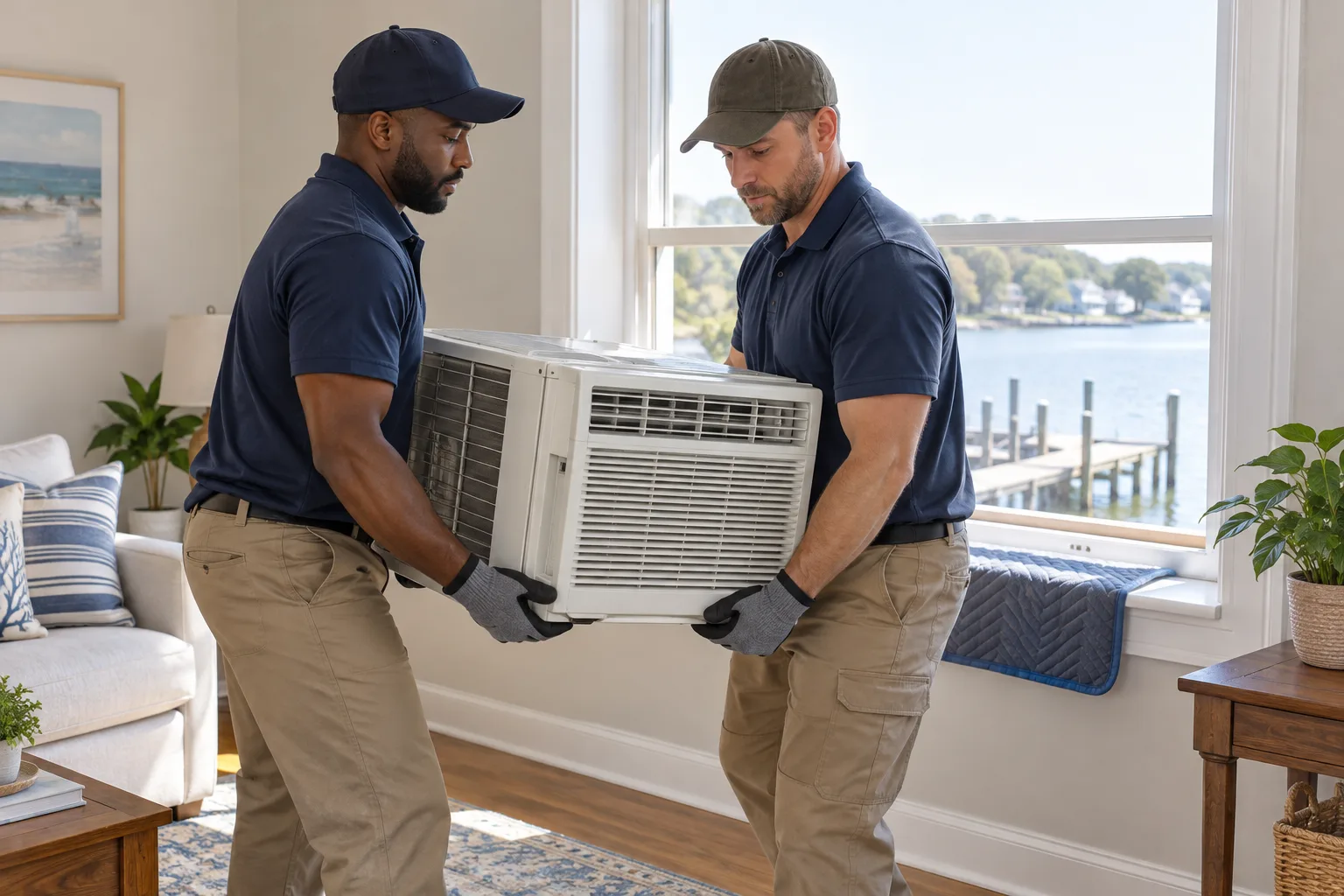
Identify the equipment
Write down the appliance type and whether it is intact, damaged, or already missing components. Do not cut refrigerant lines or release gas to make an appliance easier to move.
- Refrigerator or freezer
- Window or portable AC
- Dehumidifier
- Cooling appliance with damaged lines
Ask where it will be received
A municipality, transfer station, retailer, or recycler may have different appointment and preparation rules. Check the current rule for the exact locality and receiving facility.
EPA consumer guidance recommends checking municipal, utility, retailer, or recycler options rather than assuming a curbside appliance will follow a compliant path.
Do not treat a sticker as proof
EPA guidance says a sticker alone is not the federal verification method for refrigerant removal at final disposal. The final disposer must recover refrigerant or maintain the required signed statement or supplier arrangement.
Prepare for the physical move
Drain condensate, remove loose accessories, secure doors, measure the route, and identify the loading point. Refrigerant handling and safe carrying are separate parts of the same disposal plan.
Sources checked
Safe-disposal guidance was checked against the U.S. EPA appliance-disposal guidance. Chesapeake municipal context was checked against the City of Chesapeake bulk trash page. Local rules can change, so verify the current receiving-facility requirements.