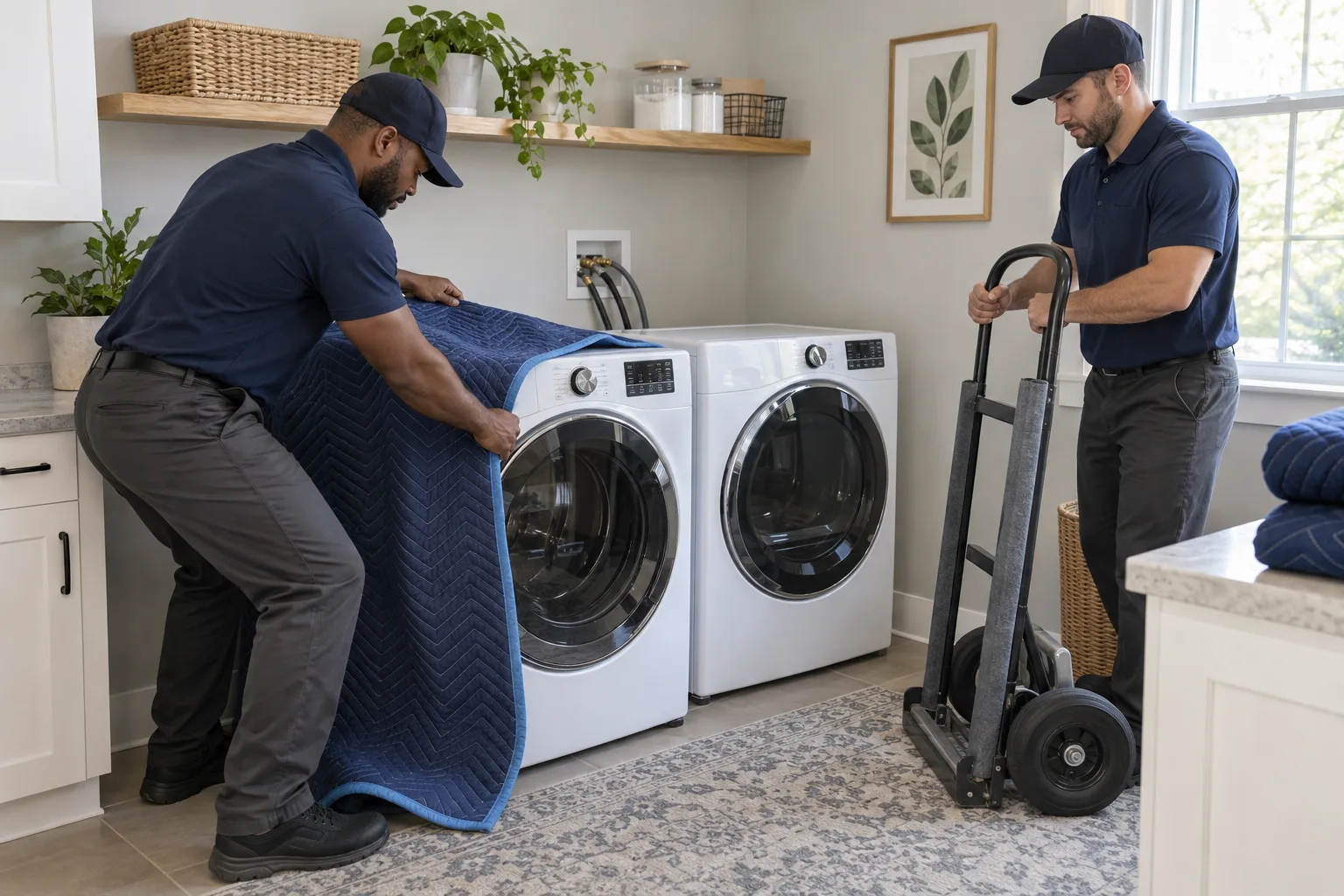
Separate utility work from hauling
Shut off washer water valves and arrange disconnection of supply hoses. Disconnect electrical power, the dryer vent, and any gas connection through the appropriate qualified person.
Hauling should begin only after the machines are safe to move. Do not pull a gas dryer forward while it is connected.
Drain and contain remaining water
Run the manufacturer-recommended drain step if the washer operates, then lower and contain the drain hose. Keep a shallow pan and towels nearby because pumps and hoses can retain water.
Tell the scheduler if the machine cannot drain or has standing water. That changes weight, leak protection, and handling.
- Water valves closed
- Supply hoses disconnected
- Drain hose contained
- Drum empty
- Floor dry
Check a stacked setup
A stacked pair may be a single appliance or two units joined by a stacking kit. Identify which you have and whether the kit can be released without moving the pair first.
Measure the closet opening, ceiling clearance, and turn outside the laundry area. Shelves above the machines can block the lift needed to separate units.
Send five useful details
When you call, share the washer type, dryer fuel, stacked or side-by-side layout, stairs, and narrowest doorway. Add any known leak, rust, or damaged controls so handling can be planned.
Sources checked
Safe-disposal guidance was checked against the U.S. EPA appliance-disposal guidance. Chesapeake municipal context was checked against the City of Chesapeake bulk trash page. Local rules can change, so verify the current receiving-facility requirements.